
The Nuclear Coercion Crisis
You Only Live TwiceThis thread traces how intercepted Soviet planning creates a nuclear crisis and how political responses frustrate the intended coercion.
increasing Bearing strength in each event
 decreasing
Bearing strength in each eventdecreasingA Test Announced
A Test Announced
The threat in the telegram
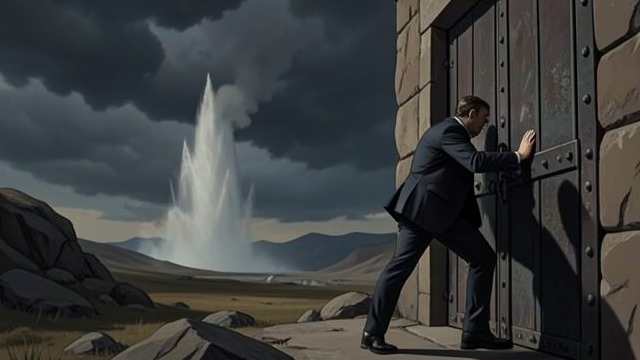
A decoded Soviet message reports possession of a 200-megaton weapon and plans for a test near Novaya Zemlya on September 20. It anticipates public anger over fallout in Arctic and Pacific regions.
The message also describes a threat against Britain, using the prospect of total destruction to pressure the British government into removing American bases and disarming.
Fear as a strategy
The Soviet plan relies on political isolation as much as explosive force. Its authors expect Washington to hesitate before risking nuclear war for an ally they regard as expendable.
The intercepted text gives Bond a view of coercion in its own strategic language. Its importance lies both in what it says and in the source’s access to the enemy’s thinking.
Britain Acts on Warning
Britain Acts on Warning
A managed response
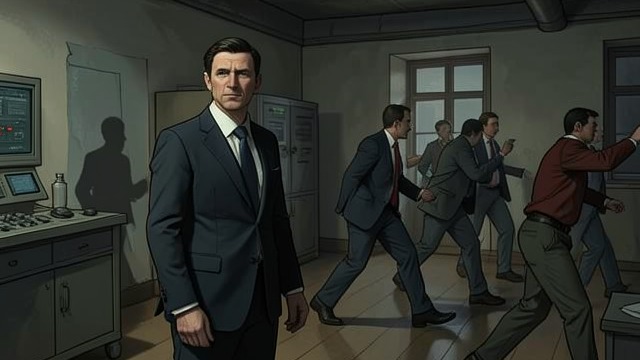
The anticipated Soviet test occurs and provokes the public reaction described in the intercepted message. British authorities restrict Soviet personnel’s movements, presenting the measures as protection from hostile demonstrations.
The action carries diplomatic costs, including expected reprisals against British diplomats and journalists in the Soviet Union. It shows how advance warning can help a government prepare without eliminating the danger.
Intelligence becomes leverage
The message allows Britain to understand the planned pressure campaign before its next steps unfold. Bond’s access to the intelligence has therefore mattered beyond the immediate exchange with Tanaka.
Yet the information’s secrecy limits how openly it can be used. The government must respond to a threat while protecting the source that made its response possible.
A Public Retaliation Pledge

A Public Retaliation Pledge
Deterrence made explicit
John F. Kennedy declares that the United States will retaliate fully if the Soviet Union explodes a nuclear device outside Soviet territory. The promise directly challenges the assumption that America will abandon threatened allies.
Moscow answers that it will respond in turn to Western nuclear tests on Soviet or allied territory. The exchange shows that the threat has not disappeared; it has changed shape.
Coercion checked, not erased
The Soviet plan is indefinitely postponed, and Tanaka quietly informs Bond. The crisis recedes because political resolve has altered the calculation that underpinned it.
The episode gives Bond’s intelligence mission a measurable consequence. At the same time, its uneasy outcome preserves the novel’s sense that nuclear danger remains contingent and unresolved.
The message arrives in Tokyo before September 1
After the September 20 test
Several days after the Soviet test
